Chemist · Single-Molecule Biophysicist · Educator

01 / Introduction

Studying how molecules organize, move, and change.

I investigate nucleic acid structure, biomolecular condensates, phase transitions, mechanochemical regulation, and molecular interactions using single-molecule and ensemble biophysical approaches.

Education PhD in Chemistry Kent State University
Research domain Single-Molecule Biophysics Nucleic acids and condensates
Next chapter Postdoctoral Research Indiana University
Portrait placeholder for Pravin Pokhrel
G4
Structure G-quadruplex DNA
LLPS
Assembly Biomolecular condensates
F
Mechanics Force-resolved biophysics
DNA Structure Single Molecules Phase Separation Mechanochemistry Telomere Biology

02 / About

A scientist working at the boundary of chemistry, physics, and biology.

My research asks how the sequence, structure, mechanics, and local environment of biomolecules determine what they do—and what they become.

I completed my PhD in Chemistry at Kent State University, where my work focused on nucleic acid structural dynamics, intermolecular interactions, liquid–liquid phase separation, and single-molecule biophysics. My postdoctoral research expands these questions toward mechanochemical regulation, telomeric nucleic acids, protein interactions, and disease- relevant molecular assemblies.

Beyond research, I care deeply about teaching, mentoring, scientific rigor, equitable access to research opportunities, and communicating complex ideas without oversimplifying them.

Read my scientific journey

03 / Research

Research questions that connect structure to function

My work focuses on how biomolecular structures form, reorganize, interact, and respond to physical or chemical perturbation.

01

Single-Molecule Biophysics

Resolving molecular heterogeneity, folding pathways, intermolecular interactions, and force-dependent behavior one molecule at a time.

02
G4

Nucleic Acid Structure

Investigating G-quadruplexes, telomeric DNA, structural switching, ligand interactions, and sequence-dependent molecular behavior.

03

Biomolecular Phase Separation

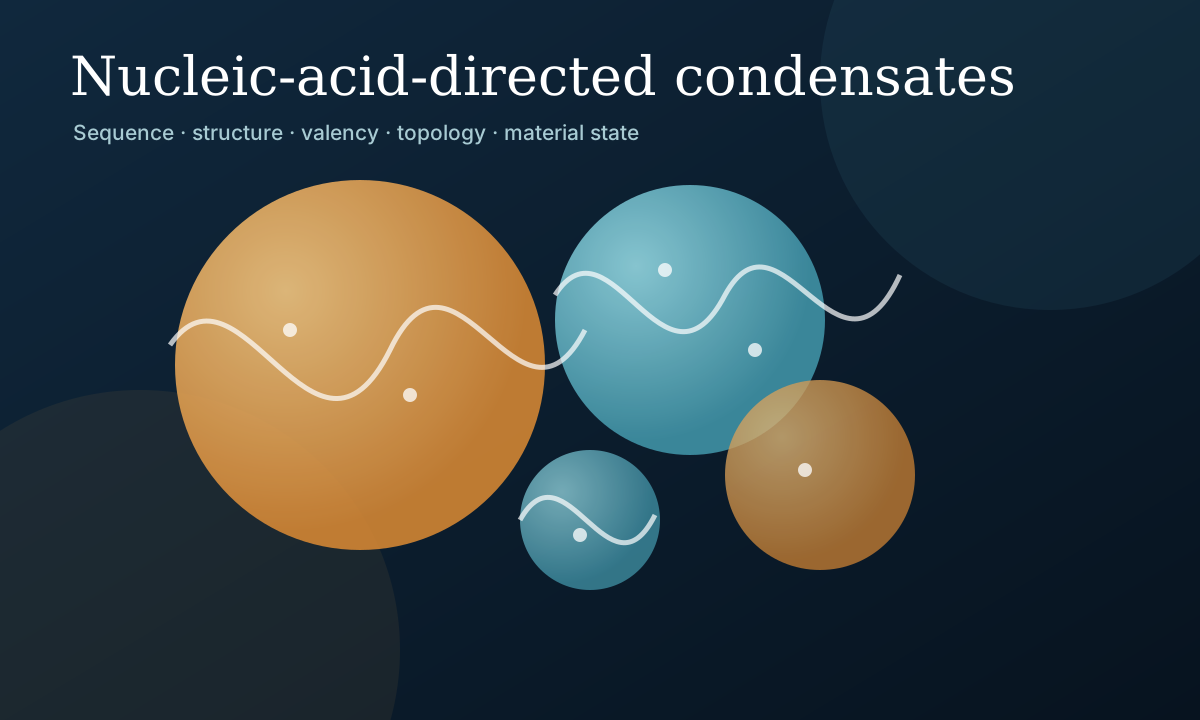
Examining the molecular features that govern condensation, material states, maturation, and pathological aggregation.

04

Mechanochemical Regulation

Using physical forces—including ultrasound-driven mechanical effects—to perturb and control biomolecular structures and assemblies.

04 / Scientific Journey

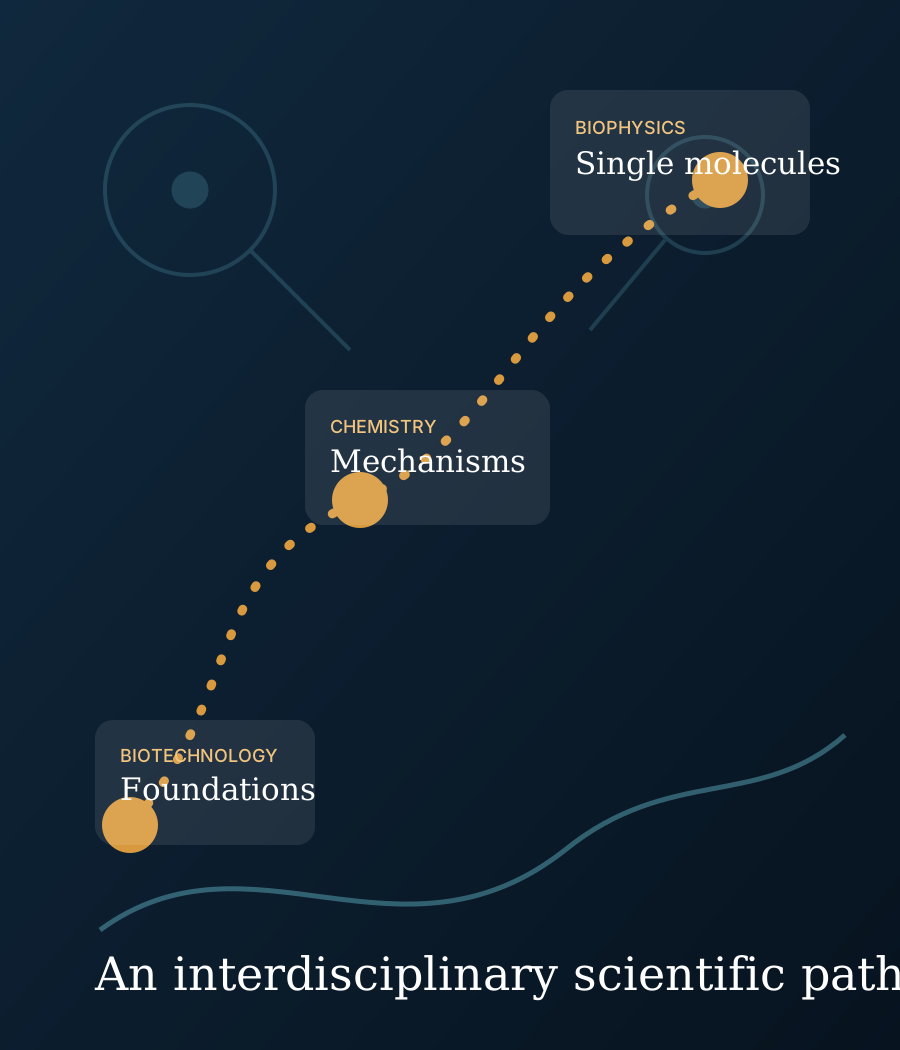
From biotechnology to molecular biophysics

A path shaped by interdisciplinary training, experimental curiosity, teaching, and a growing interest in molecular mechanisms.

Illustrated scientific journey from biotechnology to chemistry and biophysics
2017

Foundation

B.Tech in Biotechnology

Purbanchal University, Nepal
2025

Advanced Training

MA and PhD in Chemistry

Kent State University
PhD

Dissertation Focus

Phase separation dynamics

Nucleic acids, intermolecular interactions, condensates, and single-molecule approaches
Next

Postdoctoral Research

Telomeric nucleic acids and molecular regulation

Single-molecule studies of G-quadruplexes, telomere-associated interactions, and cancer- relevant molecular mechanisms

05 / Scholarship

Selected research themes and contributions

View Google Scholar
SELECTED RESEARCH Nucleic Acid Biophysics
Selected contribution

Quantifying molecular stability and force-dependent behavior

Research spanning G-quadruplex mechanics, nucleic acid–nanoparticle interfaces, intermolecular assembly, DNA chaperone activity, and biomolecular phase behavior.

View research profile →
01

Mechanochemistry

Ultrasound-driven mechanical control of biomolecular structures and assemblies

02

DNA Nanointerfaces

Mechanical stability and functional behavior of DNA corona phases

03

G-Quadruplex Biophysics

Ensemble and single-molecule approaches to structural stability

04

Condensate Biology

Molecular determinants of liquid-like, gel-like, and solid-like states

06 / Teaching & Mentoring

Teaching science as a process of reasoning, not memorization.

My teaching experience includes serving as Instructor of Record for Analytical Chemistry and as a graduate teaching assistant in General and Analytical Chemistry laboratories. I have also mentored high-school, undergraduate, and graduate researchers.

I aim to help students connect measurements to physical meaning, distinguish evidence from interpretation, and become comfortable asking precise questions.

49 Students taught in Analytical Chemistry
5 Semesters of graduate teaching assistance
Multi-level Mentoring from high school to graduate research
Abstract illustration of chemistry teaching and mentoring

07 / Scholarly & Public Service

Contributing beyond the laboratory

Scientific progress depends on careful review, responsible communication, mentorship, and expanding access to opportunity.

Editorial Work

Topic Editor

Contributing to a Frontiers in Genetics research topic focused on mechanochemical regulation, genomic assays, nucleic acid structure, and function.

Peer Review

Scientific Reviewer

Reviewing manuscripts with emphasis on experimental design, analytical validity, reproducibility, mechanistic interpretation, and evidence-based claims.

08 / Scientific Principle

A strong scientific claim should be no stronger than the evidence that supports it.

Rigor requires curiosity, but also restraint: careful experimental design, transparent limitations, reproducible methods, and conclusions that do not outrun the data.

09 / Contact

Let’s discuss molecules, methods, and meaningful questions.

Reach out regarding research collaboration, scientific writing, peer review, teaching, invited talks, or interdisciplinary discussions.